
Ask about vehicle wrap vs paint in a show parking lot and you will get half a dozen confident answers, most of them from guys who have only ever done one or the other. The vinyl crowd will tell you paint is a waste of money on a car you might change your mind about in two years.
The paint crowd will tell you a wrap is a sticker and everyone can tell. Both camps are partly right, and both leave out the part that actually decides it for you.
So here is the version without the tribalism, with a few real numbers and technical details from the people who make this stuff rather than the people arguing about it online.
Vehicle Wrap vs Paint: They Aren’t Doing the Same Job
A quality vehicle wrap commonly uses cast vinyl or another manufacturer-approved conformable film. Printed wraps generally receive a protective overlaminate, while many color-change films are manufactured as finished multilayer products and do not require a separately applied laminate. The film is positioned, heated, conformed across the panels, and finished at the edges according to the manufacturer’s instructions. It sits on top of whatever finish is already there.
Automotive paint is a bonded coating system. Depending on the refinishing system, it may include primer, sealer, basecoat, clear coat, or a single-stage finish before final sanding and polishing.
This distinction explains much of what follows. Vinyl is an applied surface, while paint becomes a bonded coating on the vehicle. Once you frame it that way, the real question stops being “Which is better?” and becomes “How long is this finish supposed to last, and what is underneath it right now?”
What You Need to Know About the Actual Cost
A full wrap in good-quality cast vinyl on a normal sedan or half-ton truck will often land somewhere in the low to mid thousands, although pricing varies considerably by market, film, installer, vehicle condition, and required disassembly. Complex builds cost more, and they cost more for a reason. A driver-quality respray using single-stage paint or a basic basecoat-and-clearcoat system can fall within a similar range or cost more. Show-quality custom paint, with flake, candy, fades, graphics, and extensive body preparation, is an entirely different financial outlay.
People often assume that the wrap number is fixed, but that couldn’t be further from the truth. Wrap pricing is influenced by much more than vehicle size. A slab-sided panel van may be relatively straightforward per square foot. A bagged mini-truck with a shaved body, rounded corners, deep body lines, aftermarket bumpers, a rolled pan, and a bed full of hard edges is not.
Regional pricing and film options can vary, so Gauge Magazine’s guide to vehicle wrap costs, benefits, and available options provides additional factors to consider when comparing quotes.
Why Precise Heat Work Is Half the Job
Vinyl has a memory. Stretch it into a recess and it wants to return toward its original shape, which is why many wrap-film systems specify post-heating for stretched and conformed areas. The required temperature and timing depend on the exact film and laminate being used.
Avery Dennison’s bulletin on vehicle wrapping specifies a post-heating temperature of 70°C for MPI 1105 Easy Apply RS with DOL 6460 High Gloss, states that an absolute maximum of 90°C should not be exceeded, and calls for post-heating no sooner than 30 to 45 minutes after application and on the same day. Other film systems may require different temperatures, so the installer must follow the instructions for the exact products being used.
Skip required post-heating or use the wrong temperature and the film may lift from recesses and edges, often after repeated exposure to summer heat. These instructions exist because this type of failure is predictable when a film is installed outside its specifications.
Imperfections Have Nowhere to Hide With Vinyl
This is the myth that costs people the most money. Gloss vinyl follows the surface beneath it. It can reveal waves, low spots, sanding marks, failing clear coat, rust, and ripples in a panel that was repaired in a hurry. In some cases, a glossy wrap can make poor bodywork more noticeable because its reflection is more uniform than the chalked or scratched paint underneath.
So the preparation conversation happens either way. If your panels need work, they need work before either finish goes on, and you may be paying a body shop first no matter which direction you go. Plenty of builders find out too late that the wrap quote assumed a straight, sound, clean vehicle. Talk it through before you commit, because an installer who works on full vehicles week in and week out can tell you whether the paint and body need attention first.
Where Wrap and Paint Win Outright
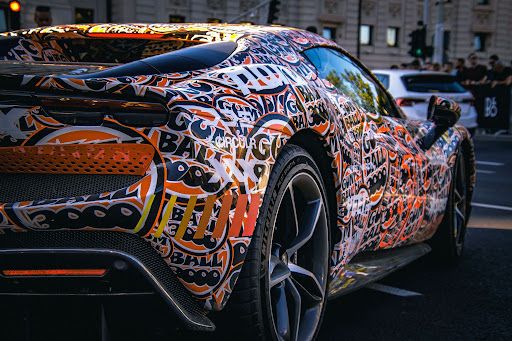
- Vinyl wins on finishes that may be difficult or especially expensive to reproduce in paint: Chrome-like finishes, brushed metal, color shift, carbon-fiber patterns, matte military greens, and printed graphics with photographic detail are all natural applications for wrap film.
- Vinyl wins when the plan might change: Show themes get old. If you build a truck around a concept and know you may want something different in three seasons, wrapping keeps more options open.
- Paint generally wins on long-term permanence: Wrap films are temporary finishes with service life and warranties that vary by product, color, installation, climate, care, and panel orientation. Horizontal areas such as roofs and hoods often experience more UV and environmental exposure than doors and quarter panels. Properly applied and maintained automotive paint can last considerably longer.
- Paint wins on depth: Vinyl can provide impressive metallic, pearl, and color-shifting effects, but layered custom paint can create visual depth that behaves differently as you move around the vehicle under show lighting.
- Paint often has an advantage on extremely complex surfaces: Recessed grilles, sharp inside corners, rivet lines, and deep scallops can challenge some films. Certain wrap products are designed for complex curves and recesses, but installers must stay within the film manufacturer’s approved applications and stretching limits.
The Combination Nobody Talks About Enough
Some of the best-looking builds use both. Paint the base properly and use vinyl for graphics, the roof, accent panels, or a seasonal theme. You get depth in the body color where it matters and flexibility in the parts you may want to change.
This approach also works well for a project that evolves gradually. Gauge Magazine’s collection of car customization ideas explains how paint, wheels, suspension, interior work, and other upgrades can be developed as parts of one overall concept.
If you go that route, do the paint first and allow the refinishing system to cure fully before applying film. Fresh paint can continue releasing solvents during the curing process, but there is no universal waiting period that applies to every paint system. Follow the paint manufacturer’s curing requirements and the wrap-film manufacturer’s surface-preparation instructions before installation.
What to Check Before You Decide Anything
First, check your class rules. If you are chasing awards, find out how your class treats vinyl. Knowing this before you spend is worth more than any advice in this article.
Second, consider your maintenance tolerance. Automatic brush washes can scratch or dull some films and may catch exposed edges. Pressure washing must follow the film manufacturer’s distance, pressure, angle, and temperature requirements. Matte and specialty films can also be damaged by incompatible waxes, polishes, or coatings. If your vehicle lives outside and gets cleaned at a gas station, vinyl may disappoint you faster than paint.
So Which One?
The vehicle wrap vs paint decision comes down to the condition of the vehicle, the finish you want, how long you expect to keep it, and whether you may change the design later.
If the body is straight, you are keeping the vehicle, and the finish you want is achievable in paint, paint it. The upfront cost may be higher, but paint generally makes more sense when you want a durable, permanent finish.
If the existing paint is sound and the finish you want is chrome-like, color shifting, textured, or based on printed graphics—or if you genuinely might change direction in a few seasons—wrap it.